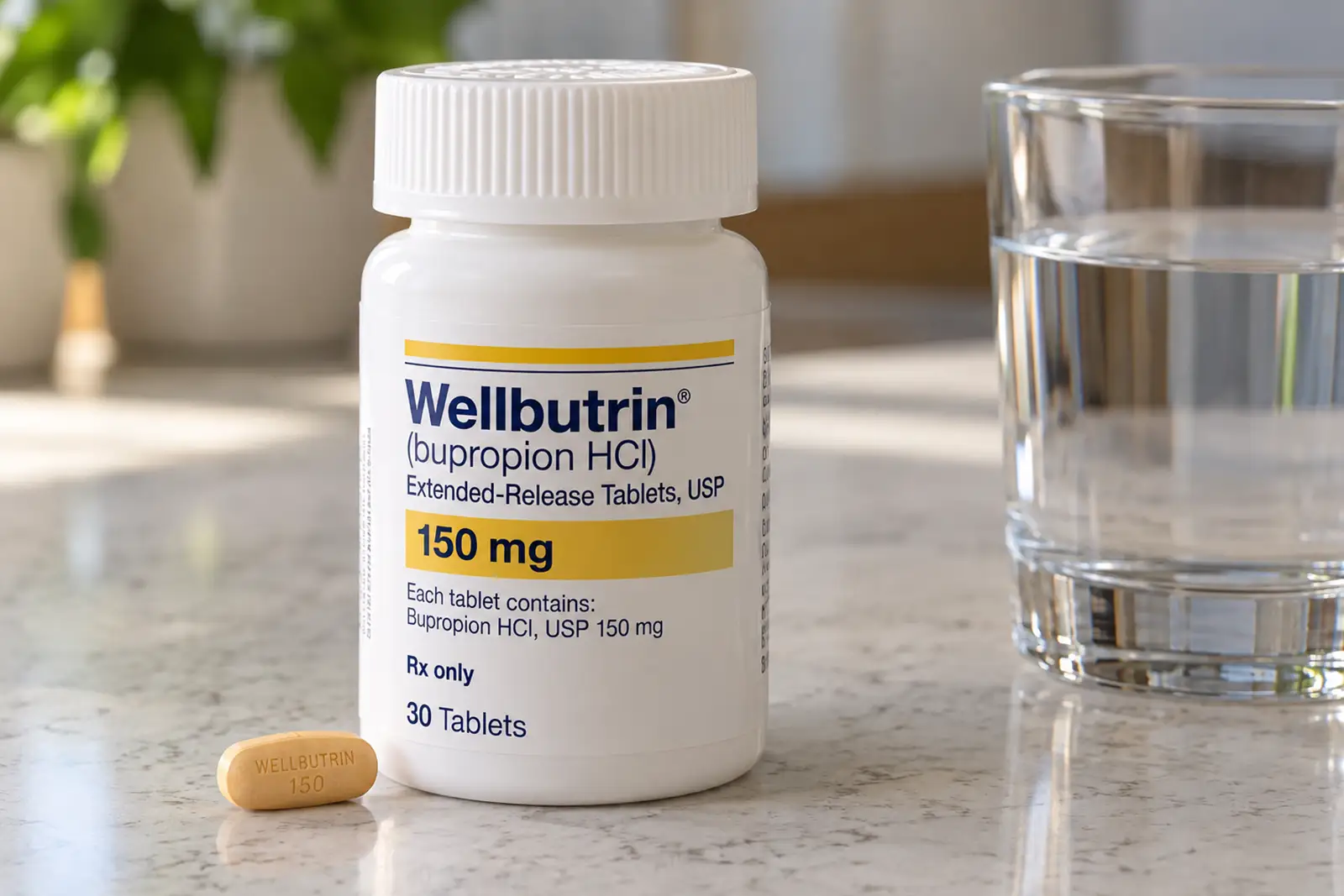
Quick Answer: Wellbutrin is the brand name for bupropion, an antidepressant used to treat major depressive disorder and help prevent seasonal depressive episodes. It affects dopamine and norepinephrine and may improve mood, energy, motivation, concentration, and interest in everyday activities.
At Saltwood Mental Health, we help adults understand their depression treatment options and develop care plans around their individual needs.
If depression is interfering with your work, relationships, health, or ability to function, contact our team to learn how more structured support may help.
What Is Wellbutrin, and Does Wellbutrin Help With Depression?
Wellbutrin is an antidepressant containing the active ingredient bupropion. It is used to treat major depressive disorder, while extended-release bupropion can also be used to help prevent seasonal affective disorder, sometimes called seasonal depression.
Unlike selective serotonin reuptake inhibitors (SSRIs), bupropion is a norepinephrine-dopamine reuptake inhibitor (NDRI), meaning it primarily affects dopamine and norepinephrine. These neurotransmitters are involved in mood, motivation, attention, energy, and reward.
How Does Wellbutrin Work for Depression?
Wellbutrin may reduce depressive symptoms by influencing dopamine and norepinephrine activity in the brain. For some people, treatment can improve low mood, lack of motivation, fatigue, difficulty concentrating, and loss of interest in activities.
Response varies from person to person. Medication decisions should consider symptoms, medical history, previous treatments, other medications, and overall mental health rather than relying on a one-size-fits-all approach.
How Long Does Wellbutrin Take to Work for Depression?
Wellbutrin for major depression may take several weeks to produce its full antidepressant effect. Changes in energy, sleep, or appetite may occur earlier, while mood and motivation can improve more gradually.
Regular follow-up allows a provider to evaluate symptoms, side effects, and whether medication or other aspects of treatment need adjustment.
What Is the Typical Wellbutrin Dosage for Depression?
Wellbutrin dosage depends on the formulation, individual health factors, and response to treatment. For bupropion XL, treatment for major depressive disorder commonly begins at 150 mg once daily in the morning and may be increased to a usual target of 300 mg once daily.
Dosage changes should only be made under medical guidance because higher doses can increase risks such as seizures. Extended-release tablets should be swallowed whole rather than crushed, divided, or chewed.

What Are the Common Side Effects of Wellbutrin?
Common Wellbutrin side effects can include insomnia, dry mouth, headache, nausea, dizziness, sweating, constipation, decreased appetite, anxiety, and agitation. Some side effects may become less noticeable as the body adjusts.
Bupropion is generally less likely than many serotonin-based antidepressants to cause sexual side effects and may be associated with weight loss in some individuals.
What Are the Serious Risks of Wellbutrin?
Wellbutrin can cause serious side effects in some people, including seizures. The risk may be higher with certain medical conditions or inappropriate dosing.
Bupropion can also increase blood pressure or contribute to agitation and insomnia. New or worsening depression, suicidal thoughts, significant behavioral changes, or symptoms of mania should be reported promptly to a healthcare professional.
Anyone experiencing an immediate risk of self-harm should call 911 or seek emergency medical care.
Who Should Not Take Wellbutrin for Depression?
Wellbutrin may not be appropriate for people with seizure disorders or certain eating disorders, including anorexia nervosa and bulimia. It can also interact with medications such as monoamine oxidase inhibitors.
Providers should know about your psychiatric history, medications, supplements, alcohol or substance use, and physical health before prescribing bupropion. A history of bipolar disorder or mania is also important to discuss.
Is Wellbutrin Right for Your Depression?
Whether Wellbutrin is appropriate depends on your symptoms, medical history, and previous treatment experiences. Rather than researching Wellbutrin reviews for depression, it’s better to speak to a medical provider about your personal symptoms and situation.
Medication may be only one part of treatment. Therapy, behavioral support, and structured outpatient care can also play important roles in recovery.
At Saltwood Mental Health, we provide individualized outpatient treatment for adults who need more support managing depression. We start off with a mental health assessment to better understand your symptoms, what might be causing them, and what level of care might be appropriate.
Contact our team today to learn how we can help you build a treatment plan around your needs and goals.